Big Scholarship Concepts
Ten conceptual areas that Scholarship questions tend to circle around. You don't need to "cover" all ten equally — but you should be able to think and argue inside each one, and (crucially) connect them to each other.
How to study a concept: read the plain-English explanation, then work on the Scholarship angle until you could explain it to someone else. Learn the key terms precisely (see the Glossary). Then attach two or three of your own examples to the concept in your Example Bank, and plan answers to the practice questions.
1. Media and society
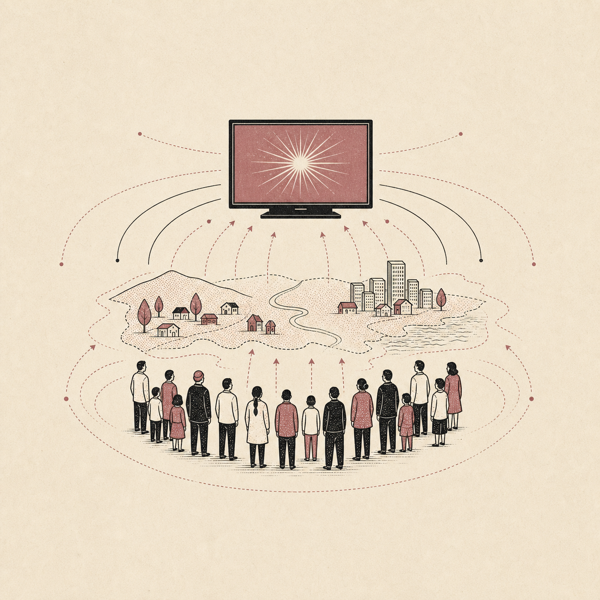
Plain English: Media doesn't just reflect society — it helps make it. The stories, images, and information we share shape what we believe is normal, possible, important, and true. At the same time, media is itself a product of society: its values, anxieties, economics, and politics. The relationship runs both ways, constantly.
Scholarship angle: Weak answers treat media as a mirror ("media reflects society") or a syringe ("media injects ideas into us"). Scholarship answers explore the circuit: media institutions select and shape content under commercial and cultural pressures; audiences interpret it actively; those interpretations feed back into culture and politics, which in turn shape what media gets made. Be ready to evaluate how much power media actually has, over whom, and under what conditions.
Key terms
socialisation mediation public opinion discourse hegemony media effects circuit of culture
Possible arguments
- Media's power lies less in changing minds than in setting the boundaries of what can be thought and discussed.
- "Media influence" is too blunt a tool: influence varies enormously by audience, context, platform, and repetition.
- Fragmented, algorithmic media may shape society more deeply than mass broadcast ever did — but less visibly.
Useful examples
- Coverage of a major NZ news event (an election, a disaster, a protest) and how it framed public understanding.
- The COVID-19 "infodemic" — the same event producing radically different social realities in different media ecosystems.
- A long-running local text (e.g. a NZ soap or reality format) and what its evolution says about changing social norms.
Practise with
- "Media does not reflect society; it manufactures it." Evaluate this claim.
- To what extent has the shift from mass media to personalised media changed media's social power?
2. Representation and ideology
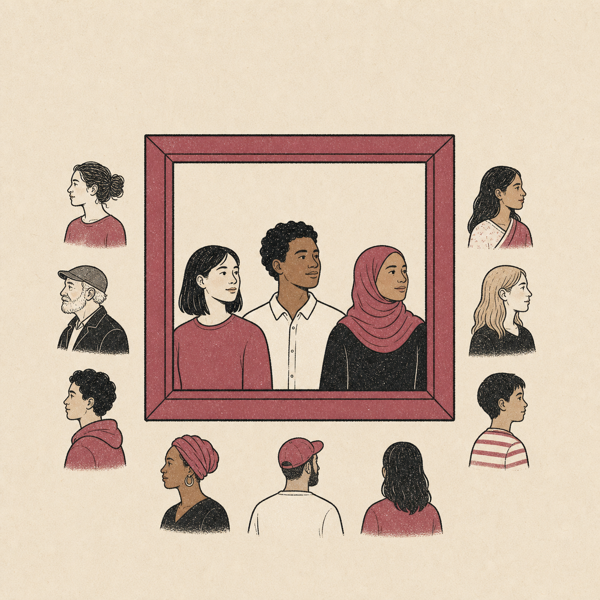
Plain English: Representation is how media re-presents people, places, groups, and ideas — always a construction, never a copy. Ideology is the set of beliefs and assumptions a representation carries, often invisibly. Every casting choice, camera angle, headline, and edit is a decision about how the world should be seen.
Scholarship angle: Move beyond "positive vs negative stereotypes". Ask: who has the power to represent whom? What is made to seem natural (and therefore unquestionable)? How do representations change when communities tell their own stories — for example, Māori-controlled storytelling versus stories about Māori made by others? Strong answers also consider counter-representation, audience resistance, and the commercial incentives behind "diverse" content.
Key terms
construction stereotype ideology hegemony naturalisation othering self-representation tokenism the gaze
Possible arguments
- Representation matters most where audiences have least direct experience to test it against.
- "Diversity" can itself be a marketable commodity — inclusion on screen without power behind the camera.
- By-Māori, for-Māori media (and Pasifika equivalents) changes not just the content of representation but its terms.
Useful examples
- Taika Waititi's films and the international circulation of Māori stories and humour.
- Whakaata Māori (Māori Television) and te reo content as deliberate counter-representation.
- A global franchise's diversity strategy (casting debates, marketing, audience backlash and counter-backlash).
- Advertising's construction of gender — compare a campaign from 20 years ago with a current one.
Practise with
- "Whoever controls representation controls reality." Discuss with reference to media in Aotearoa.
- Has the demand for diverse representation changed media power structures, or merely media surfaces?
3. Audience and reception
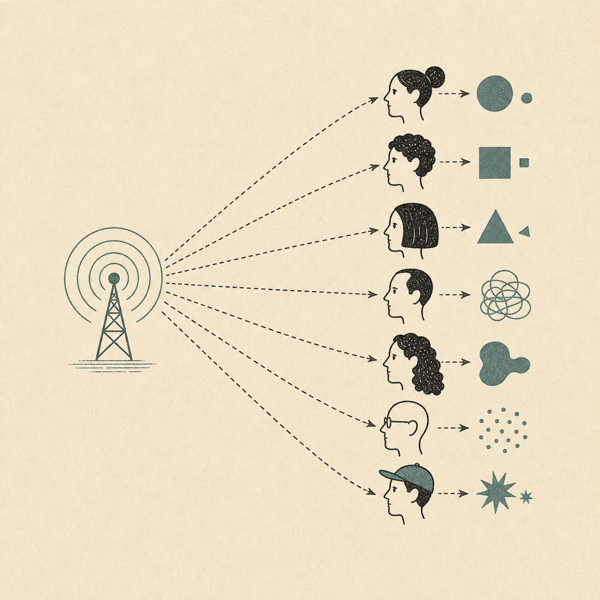
Plain English: Audiences are not blank screens that media projects onto. People interpret texts through their own experiences, communities, and purposes — accepting, negotiating, or rejecting intended meanings. Audiences also do things with media: relax, learn, belong, perform identity, kill time.
Scholarship angle: The live debate is where power sits: with the text, the audience, or — increasingly — the platform. Hall's encoding/decoding and uses-and-gratifications give audiences power; cultivation and algorithmic curation suggest limits to it. The strongest essays hold both: audiences are active, but they act within systems designed to predict and monetise their activity. Fandom complicates this further — audiences as co-creators, marketers, and sometimes adversaries of media producers.
Key terms
encoding/decoding preferred reading negotiated reading oppositional reading active audience fandom parasocial relationship polysemy
Possible arguments
- The "active audience" is real but overstated: activity itself is now harvested as data and fed back as recommendation.
- Fandom has shifted from the margins of media culture to one of its primary economic engines.
- Different generations effectively live in different media — "the audience" no longer exists as a single thing.
Useful examples
- A fandom that changed a media product (campaigns to renew/rework shows, fan edits, shipping cultures).
- Oppositional readings of an ad campaign or news story — where audiences read "against" the intended meaning publicly.
- Parasocial dynamics around a streamer, podcaster, or influencer, and what they reveal about audience needs.
Practise with
- "The audience has never been more powerful — or more controlled." Evaluate.
- To what extent do audiences, rather than producers, now determine what media means?
4. Media industries and ownership
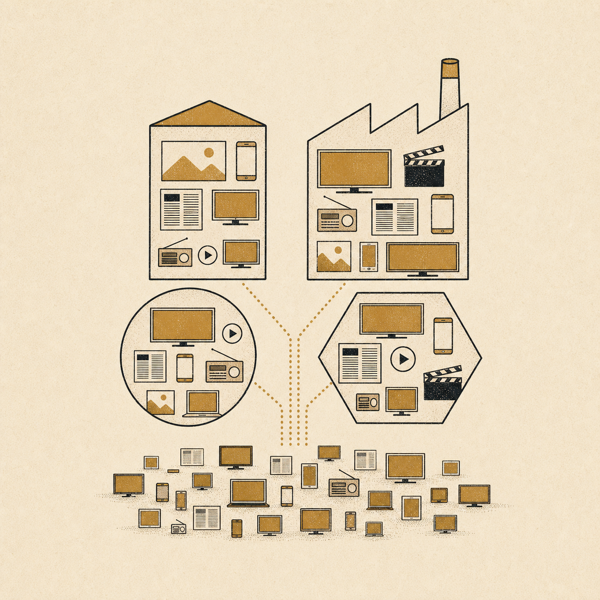
Plain English: Media is made by organisations that need money to survive — through advertising, subscriptions, public funding, or data. Who owns a media outlet, and how it is funded, shapes what it makes, who it serves, and what it avoids. Ownership worldwide has concentrated into fewer, larger companies.
Scholarship angle: Don't stop at "concentration is bad". Analyse mechanisms: how does a funding model shape content? (Ad-funded media must aggregate attention; subscription media must prevent churn; platform media must maximise engagement.) Consider NZ specifically: a small market, dependent on public funders like NZ On Air and Te Māngai Pāho, with major news outlets owned or squeezed by global forces. Evaluate proposed fixes — public funding, regulation, making platforms pay for news — and their limits.
Key terms
conglomerate vertical integration concentration of ownership commercial imperative public service media commissioning monetisation market failure
Possible arguments
- The business model is the message: how media is paid for predicts its content better than who owns it.
- Small media markets like Aotearoa expose the weaknesses of purely commercial media earlier and more brutally than large ones.
- Streaming did not free content from commercial logic — it created new logics (algorithm-friendly content, cancellation culture, franchise dependence).
Useful examples
- The financial pressures on NZ news media — closures, mergers, and public debate about who should fund journalism.
- NZ On Air / Te Māngai Pāho funding as intervention in a market that wouldn't otherwise make local content.
- A streaming service's commissioning and cancellation decisions, and what they reveal about its model.
- A global media merger or acquisition and its consequences for what audiences get.
Practise with
- "Follow the money: media content can always be explained by its funding model." How far do you agree?
- Should the survival of local media in small countries be left to the market? Argue your position.

5. Genre, narrative, and form
Plain English: Genre is a contract of expectations between producers and audiences (a horror film promises certain pleasures; a news bulletin promises others). Narrative is how stories are structured to create meaning and emotion. Form is the shape of the medium itself — episode length, screen size, scroll, feed, loop — and it quietly disciplines everything made within it.
Scholarship angle: Treat genre as dynamic and economic, not as a labelling system. Genres evolve through repetition and variation; hybridity and genre-blending are commercial strategies as much as creative ones. The sharpest current questions are formal: what does the 30-second vertical loop do to storytelling? What did the binge-released season do to narrative structure — and what is the return of weekly release doing now? Form is where technology, industry, and creativity visibly collide.
Key terms
conventions verisimilitude hybridity narrative arc equilibrium intertextuality serialisation remediation mode of address
Possible arguments
- Genre innovation usually happens at the margins (low-budget, web-native, local) and is then absorbed by the centre.
- Platform form — the feed, the loop, the autoplay — is now a stronger shaper of storytelling than genre tradition.
- Audience genre literacy has become so high that self-awareness (parody, subversion, meta-commentary) is itself a convention.
Useful examples
- A genre film or series that consciously subverts conventions — and why that subversion sells.
- TikTok/Reels storytelling conventions: hooks in the first second, serialised "storytimes", sound-driven narrative.
- True crime as a genre spanning podcast, documentary, and drama — same material, different formal contracts.
- An NZ text that hybridises global genre with local voice (e.g. NZ comedy-horror traditions).
Practise with
- "Genres exist to manage risk, not to inspire creativity." Evaluate.
- How has the form of digital platforms changed the kinds of stories media tells?
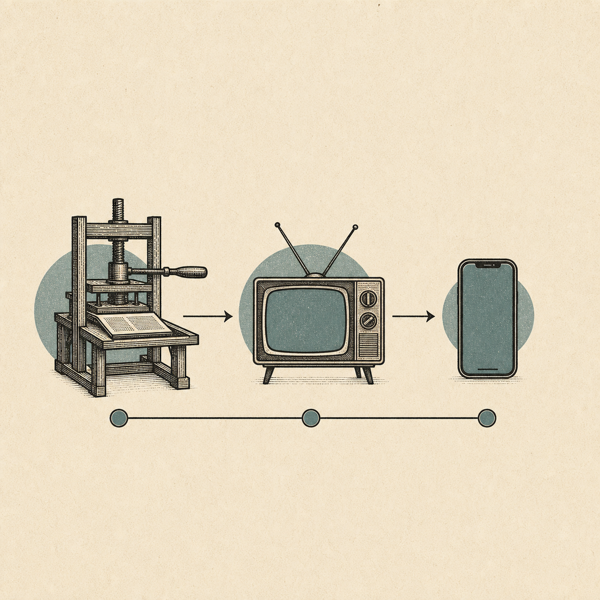
6. Technology and media change
Plain English: Every major media technology — print, film, broadcast, internet, smartphone, AI — has restructured how media is made, distributed, paid for, and experienced. Technology change is never just technical: it redistributes power between producers, audiences, and intermediaries.
Scholarship angle: Avoid both technological determinism ("technology X caused social change Y") and naive optimism ("the internet democratised media"). The strong move is to analyse who gains and who loses with each shift, and to note continuities beneath the disruption: gatekeepers didn't disappear with digital media, they changed (from editors and schedulers to platforms and algorithms). Generative AI is the live case: a technology unsettling production labour, authenticity, copyright, and trust simultaneously — be ready to discuss it with specifics, not hype.
Key terms
convergence disruption democratisation gatekeeping disintermediation affordances technological determinism remediation
Possible arguments
- Digital technology lowered the barriers to making media but raised the barriers to being seen — attention became the scarce resource.
- Each "democratising" technology has produced new concentrations of power (the platform oligopoly).
- Generative AI changes the economics of content before it changes its quality — abundance itself becomes the problem.
Useful examples
- The smartphone camera and citizen witnessing — protest footage, accountability, and its limits.
- A specific AI controversy in media: synthetic actors and the Hollywood labour disputes, AI-generated news content, deepfakes in election campaigns.
- The decline of scheduled broadcast TV in NZ and the migration of audiences (and advertising) online.
Practise with
- "New media technologies promise democratisation and deliver new gatekeepers." Discuss.
- Evaluate the claim that generative AI represents a fundamentally different kind of media change from previous technologies.
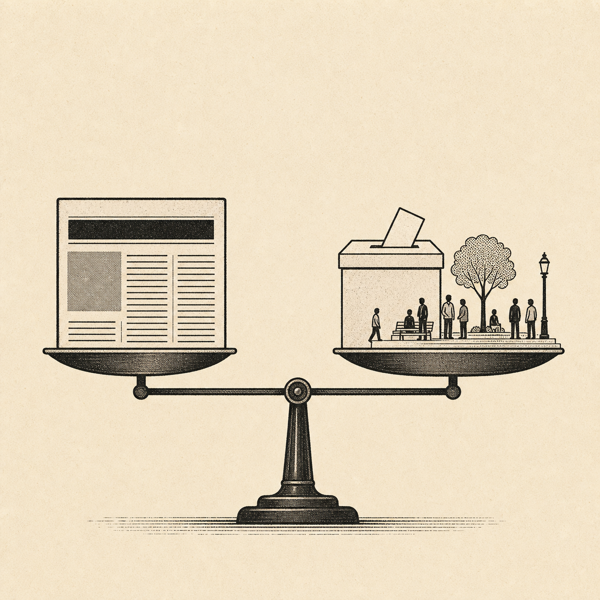
7. Journalism, democracy, and public interest
Plain English: Democracies depend on citizens knowing what's going on — and journalism is the institution societies built to do that job: informing the public, scrutinising power, and providing a shared space for debate. That institution is under pressure: collapsing revenue, declining trust, competition from platforms, and floods of misinformation.
Scholarship angle: The Scholarship question underneath most journalism questions is: is the crisis of journalism a crisis of democracy? Engage with the economics (advertising's migration to Google/Meta gutted the model that funded reporting), the trust problem (why audiences disengage from or distrust news, including "news avoidance"), and the proposed remedies (public funding and its independence problems, making platforms pay, philanthropy, paywalls and the inequality they create). NZ offers sharp local material: a small, fragile news market where these global forces hit fast.
Key terms
fourth estate public sphere public interest gatekeeping framing agenda-setting misinformation / disinformation news avoidance churnalism
Possible arguments
- Journalism's funding crisis is a market failure: the social value of news vastly exceeds anyone's willingness to pay for it.
- Distrust of news is not always irrational — it can be a response to real failures of representation and accountability.
- Platforms have taken over journalism's distribution role without accepting its responsibilities.
Useful examples
- Closures and cutbacks in NZ newsrooms, and the public debate about how journalism should be funded.
- An investigative story (NZ or global) that demonstrably changed outcomes — journalism's case for itself.
- A misinformation event (election, pandemic, disaster) and how news media and platforms responded differently.
Practise with
- "A democracy gets the journalism it pays for." Evaluate with reference to Aotearoa New Zealand.
- To what extent have social media platforms replaced — rather than destroyed — the public sphere?
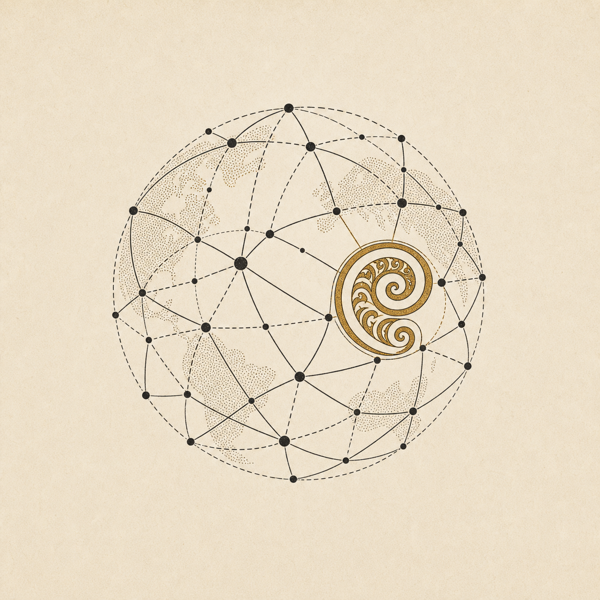
9. Globalisation, localisation, and cultural identity
Plain English: Media now flows across borders instantly: the same franchises, formats, and feeds reach almost everywhere. This raises old fears (will big cultures swamp small ones?) and produces new phenomena (global hits from outside Hollywood; local versions of global formats; cultures using global platforms to project themselves outward).
Scholarship angle: The crude version is "cultural imperialism: American media destroys local culture." The Scholarship version tests that idea against the evidence: the Korean Wave, anime's global reach, and Māori stories travelling internationally all complicate one-way-flow models. Concepts like glocalisation (global formats, local content) and contra-flow (periphery-to-centre media movement) let you argue with precision. For Aotearoa: what does cultural sovereignty mean for a small bicultural nation whose screens are dominated by imported content — and whose own stories increasingly find global audiences?
Key terms
cultural imperialism glocalisation contra-flow hybridity cultural identity soft power format trade cultural sovereignty
Possible arguments
- Globalisation has made cultural identity more, not less, valuable — distinctiveness is now a competitive advantage.
- Streaming globalised distribution but concentrated decision-making: the world watches more diverse content chosen by fewer companies.
- For indigenous cultures, global platforms are double-edged: unprecedented reach, on infrastructure they don't control.
Useful examples
- The Korean Wave (film, drama, K-pop) as deliberate, state-supported contra-flow.
- Māori and Pasifika screen stories reaching global audiences — and the debates about authenticity and ownership that follow.
- A global reality/game format localised for NZ — what changes, what doesn't, and why.
- Te reo Māori content on global platforms (music, gaming, social media) as cultural revitalisation through global infrastructure.
Practise with
- "Global media homogenises culture." Test this claim against specific evidence.
- Can a small nation maintain cultural sovereignty in a globalised media environment? Discuss with reference to Aotearoa.
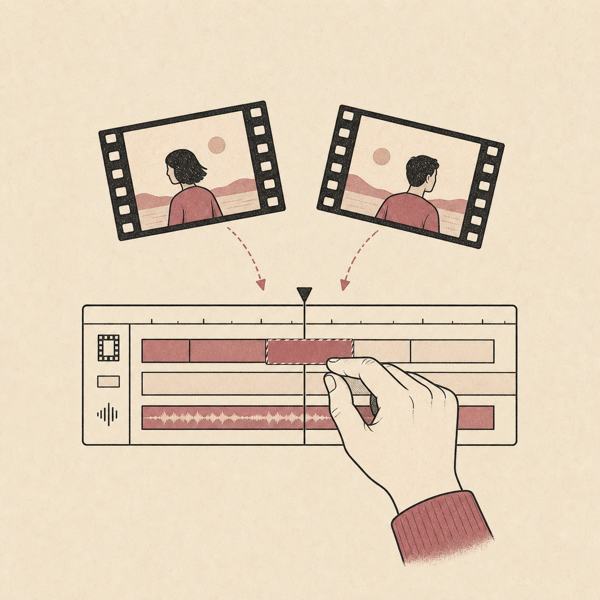
10. Production practice and creative decision-making
Plain English: Media doesn't appear; it is made, through thousands of decisions — framing, casting, editing, sound, platform, budget — each constrained by time, money, technology, and intended audience. Understanding production means understanding media from the inside.
Scholarship angle: Your own production work is a legitimate and distinctive source of insight — almost no other evidence in your essay can be first-hand. The Scholarship move is to connect your creative decisions to the same forces that shape professional media: you compromised for your audience, your platform, your resources; so does every producer. Production experience lets you evaluate concepts like genre, representation, and technology as a practitioner, not just a spectator. See the Production Reflection page for how to develop this.
Key terms
pre-production constraints affordances target audience production values mise-en-scène post-production iteration
Possible arguments
- Constraints are not the enemy of creativity but its engine — in student work and professional media alike.
- Every aesthetic choice is also an audience choice, an economic choice, and often an ideological choice.
- The collapse of production costs has shifted the scarce skill from making to making meaningfully.
Useful examples
- Your own production work: a decision you made, why, and what it taught you about professional practice.
- A documented production case study — a director's account of a constraint that shaped a famous creative choice.
- Low-budget NZ productions that turned constraint into style.
Practise with
- "To understand media, you must make media." Evaluate, drawing on your own production experience.
- How do industry constraints shape creative decision-making? Discuss using professional and personal examples.
The synthesis habit: Scholarship questions rarely sit inside one concept. "Should platforms pay for news?" is industry + journalism + technology + regulation. After studying each concept, practise drawing lines between them: pick any two concepts above and write one sentence connecting them through a real example.
8. Social media, algorithms, and platform capitalism
Plain English: Platforms like TikTok, Instagram, YouTube, and X don't make most of their content — users do. The platform's product is attention: it uses algorithms to keep people engaged and sells that engagement to advertisers, harvesting behavioural data along the way. This business model — platform capitalism — now shapes much of global media culture.
Scholarship angle: The algorithm is a new kind of media power: it doesn't make content, it decides what gets seen, invisibly and at scale. Strong essays analyse the consequences of optimising for engagement (outrage travels, nuance doesn't), the creator economy's precarity (creators as unpaid R&D for platforms), and the regulatory struggles (age limits, data law, content moderation, platform bans). Keep critical balance: platforms also enabled communities, creativity, and voices — including Māori, Pasifika and rangatahi creators — that legacy media excluded.
Key terms
algorithmic curation attention economy engagement platform capitalism datafication filter bubble creator economy moderation virality
Possible arguments
Useful examples
Practise with